Collaboration and engagement towards zero-emission mobility in island ecosystems through green hydrogen from the sea



SUMMARY
Collaboration and engagement towards zero-emission mobility in island ecosystems through green hydrogen from the sea
Island and remote coastal communities have an energy system highly dependent on fuel imports. Green hydrogen production from renewable energy resources can be a key solution to provide zero-emission fuels. Work led by Dr Pau Farràs demonstrated the first example worldwide for green hydrogen production using seawater and sunlight. The SEAFUEL project is the basis for decarbonisation of islands, using hydrogen as a green energy vector to displace fossil fuels in local transportation, with up to 200 ton per year of carbon dioxide emissions with the current hydrogen production plant. Up to four EU-funded projects have resulted from SEAFUEL, with significant public engagement with stakeholders, and technology development of new processes for hydrogen production. Through SEAFUEL and the follow-up projects, the research led to impact on public awareness and attitudes, commercial impact through a spin out and involvement by companies, and policy initiatives with direct input to regional sustainable and climate action plans.

Research Description
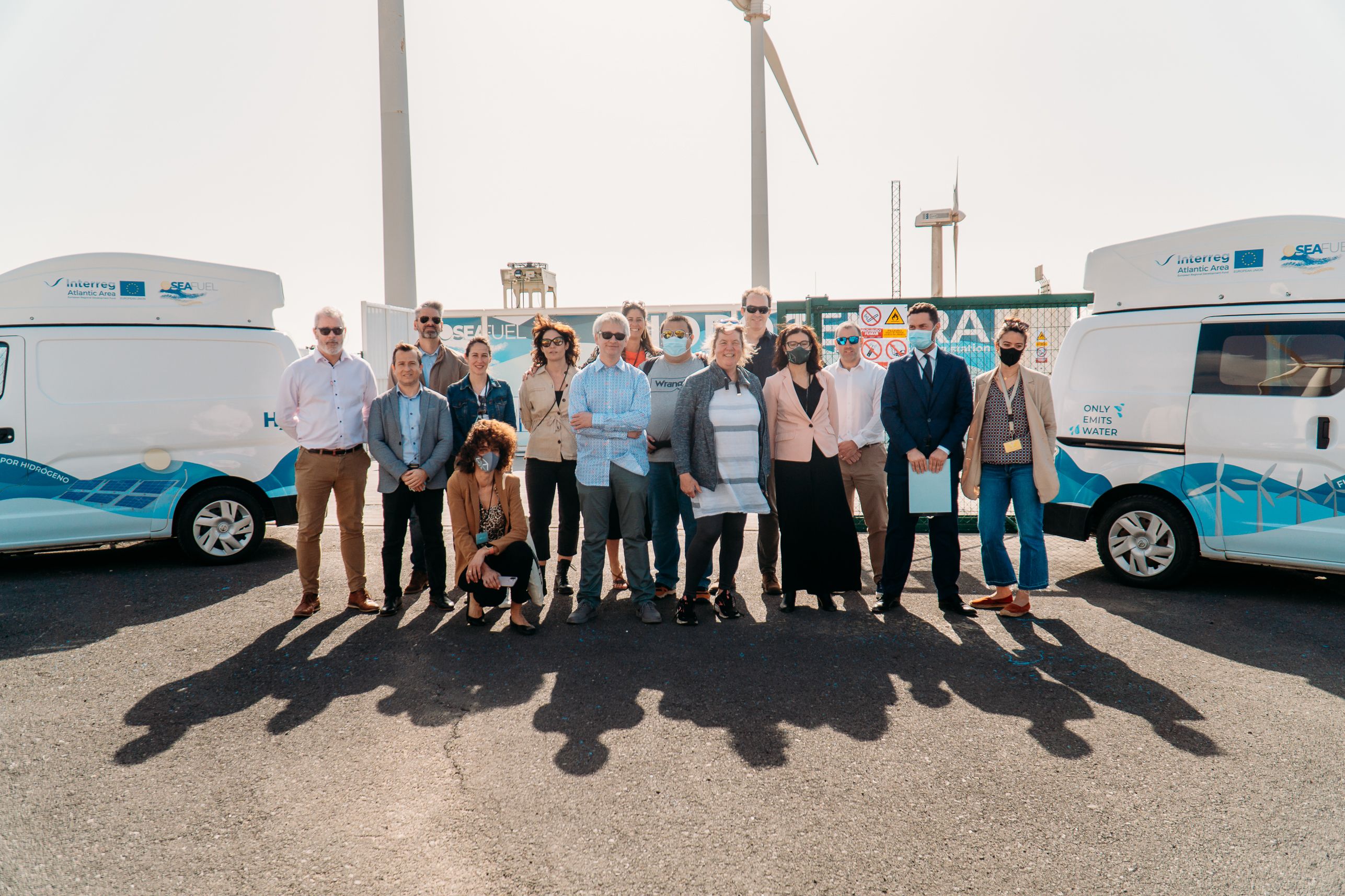
Dr Pau Farràs led project SEAFUEL from 2017 until July 2023 with four main research tasks to accomplish [R1]. SEAFUEL had 10 partners and 13 associate partners from academia, industry, civil society and local and regional government, span over four countries of the Atlantic Area – Ireland, United Kingdom, Portugal and Spain. The main research objective was the development of a green hydrogen production plant in Tenerife (Canary Islands) at the facilities of the partner Institute of Technology and Renewable Energies (ITER), and its use in zero-emission road mobility using hydrogen fuel vans.
On the scientific and technical aspects, publications by Dr Farràs and collaborators [R2-R3] on seawater electrolysis have achieved significant impact leading to the award of a new EU project ANEMEL [R4]. Research efforts focused on the preparation of active, stable and selective electrocatalysts for seawater splitting to produce hydrogen. In addition, SEAFUEL partners designed and constructed the hydrogen plant and successfully modified up to four battery electric vans to run on hydrogen.
ANEMEL: turning dirty water into clean hydrogen
On the policy aspects, research focused on understanding how island ecosystems can be used to test the new renewable energy and fuels technologies required for Europe to reach a carbon neutral continent by 2050. The work identified barriers and incentives that can be used to speed up this process [R5]. In line with this work, specific roadmaps for the deployment of hydrogen in other regions of the Atlantic coast were drafted and shared with regional authorities [R1].
In conjunction with Toyota Canarias and Hyundai Canarias, hydrogen fuel cell vehicles were used to collect surveys from tourists and locals on the use of hydrogen in the island for a sustainable mobility. This was one of the first examples of linking green hydrogen and tourism in a setting such as vehicle rentals, and has been extended as part of the Green Hysland project based in the island of Mallorca [R4-R6]. As part of the HUGE project, we engaged with several stakeholders and organised seminars and webinars in relevant topics such as hydrogen usage in trucks (case study in Iceland), in ferries (Aran Islands, Ireland, and Faroe Islands), and for green methanol production (Finland). The research of those projects will continue as part of the newly EU-funded hydrogen valley project SH2AMROCK, based in Galway [R4].

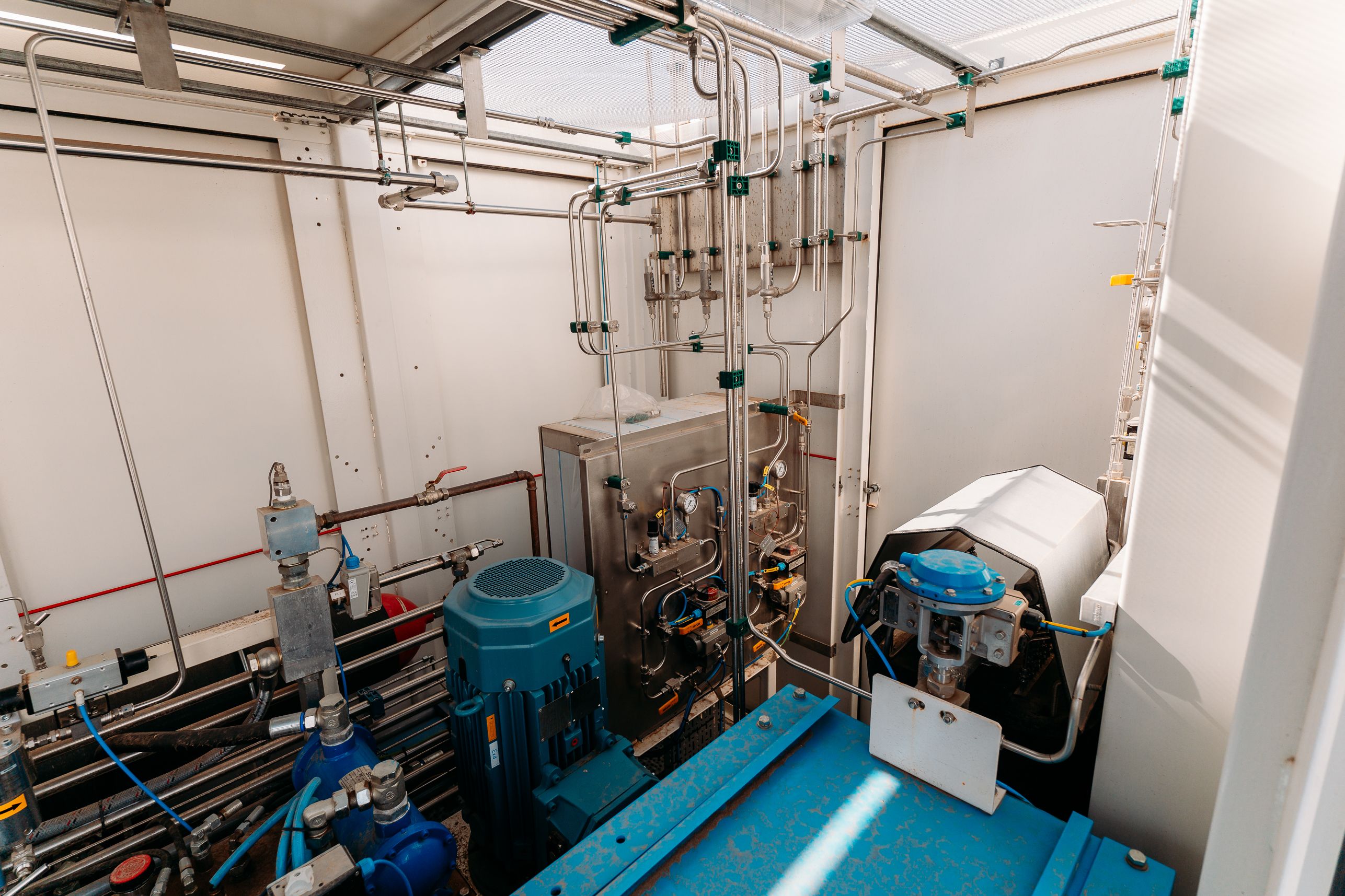
Inside the hydrogen fuelling station, showing the water electrolyser and the compressor
Inside the hydrogen fuelling station, showing the water electrolyser and the compressor



Details of the Impact
Research led by Dr Farràs within the SEAFUEL project was very timely as it followed the global explosion of interest towards green hydrogen. At the start of SEAFUEL in 2017, hydrogen was a niche topic with little interest in society and policy. However, the increasing concerns over climate change with the COP meetings, linked to the exponential growth of renewable energy led to bringing back the hydrogen economy as a central topic of discussion in the scientific, social and political spheres. Hydrogen was placed at a similar level as batteries as energy storage medium, as well as an alternative to fossil fuels in the transport and energy sectors. Through SEAFUEL and the follow-up projects, the research at the different levels led to impact on public awareness and attitudes, commercial impact through a spin out and involvement by companies, and policy initiatives with direct input to regional sustainable and climate action plans.
Commercial impact
Following the work on saline water electrolysis that began in SEAFUEL with Dr Wenming Tong, the research group led a new EU-funded project ANEMEL in 2022 with eleven partners across nine countries in Europe. The project is focussed on the development of a water electrolyser operated using saline water mimicking operation on seawater, and the research has triggered the foundation of the spin out company Green Renewable Technologies Ltd (E1). The company is currently focused on developing the technology further and creating a business value proposition for the application of water electrolysers on off-shore renewable energy platforms.
ANEMEL is a project co-funded by the European Innovation Council, with partners and associated members in 8 countries. Our experts come from both academia and industry, to ensure a fast commercialisation of the prototypes and products.
The commercial partners in SEAFUEL have also benefitted from the impact created from the project. For example, HyEnergy:
"has already borne fruit with some of the SEAFUEL partners, including ourselves and the university, working together in larger deployment projects in Mallorca and more locally in Galway (E2)."
Also for Logan Energy, technology developer:
"our involvement in SEAFUEL informed us about the issues with deployment of innovative energy systems in more remote applications and the willingness of technology developers to support their technology outside the mainstream locations (E3)."
The research work in Tenerife also speared the creation of a Hydrogen Hub along with large industries in the energy sector of the Canary Islands such as Enagas Renovable, Grupo Disa, Toyota and Hyundai, with the aim to develop the hydrogen supply chain from production to usage in Tenerife and support the decarbonisation of the energy and transport sectors in the island (E4).
The much-anticipated hydrogen refueling station was launched in the south of Tenerife, offering groundbreaking benefits for our environment with green hydrogen technology. This initiative not only showcases innovation but also represents a transformative step forward for renewable energies.
Development of hydrogen fuelled ecosystems
SEAFUEL partners organised over 25 activities with professionals in the energy sector, general public and school visits to explain the relevance of green hydrogen production and its use in zero-emission mobility (E5). Dr Farràs active role triggered collaboration with other organisations and projects such as the first hydrogen valley project in southern Europe, Green Hysland. The project was funded by the Clean Hydrogen Partnership and the call text of the programme highlighted the link between a hydrogen eco-system a sustainable tourism, in line with the SEAFUEL model. The Green Hysland project was even highlighted by EU President Ursula von der Leyen as an example of an island hydrogen ecosystem to be replicated in Europe (E6). Dr Farràs work combined with Prof Monaghan at the University of Galway have been instrumental in making Galway a centre of excellence in hydrogen technologies, and the recent successful funding award to project SH2AMROCK, the first EU-funded hydrogen valley in Ireland. SH2AMROCK is a multidimensional project coordinated by the University of Galway to design, build and operate a hydrogen station as well as to demonstrate multiple end uses in mobility and industry, with strategic participation of the Port of Galway. It is supported by €8m EU funding, with the participation of 30 partners (globally) and it lasts from 2024 to 2029 (including 2 years of operations) (E7).
Impact on public perception, community engagement and sustainable tourism
SEAFUEL focused on how hydrogen can support the green transition in islands by providing zero-emission fuel for transportation. Via a series of seminars, webinars, news articles and conferences, SEAFUEL has reached over 30,000 people from different age groups, sectors and professionals (E5). This has significantly improved the knowledge about green hydrogen technologies, with the active participation of renewable energy communities in Ireland such as the Energy Cooperatives Ireland:
"Dr Farràs guided us through a complex cutting edge sustainability research project enabling us to give extremely valuable employment and training opportunities to members of the local community. Through this process the wider community also engaged with key regional stakeholders in hard-to-decarbonise economic sectors (for example in ferry and aviation transport), which we hope will come to fruition during the SEAFUEL follow-on project SH2AMROCK (E8)."
The focus on the touristic sector, started in SEAFUEL in collaboration Dr van Rensburg, led to a close collaboration with Toyota Canarias and Hyundai Canarias (E9), and the first surveys with tourists worldwide with a real test drive of a fuel cell vehicle. This triggered interest from the World Travel Market Global Hub which conducted an interview with Dr Farràs. Shortly after, SEAFUEL won the "One to Watch" award at the World Tourism Awards in 2022 and it has been used as an example for other hydrogen islands in Europe and elsewhere (E10).
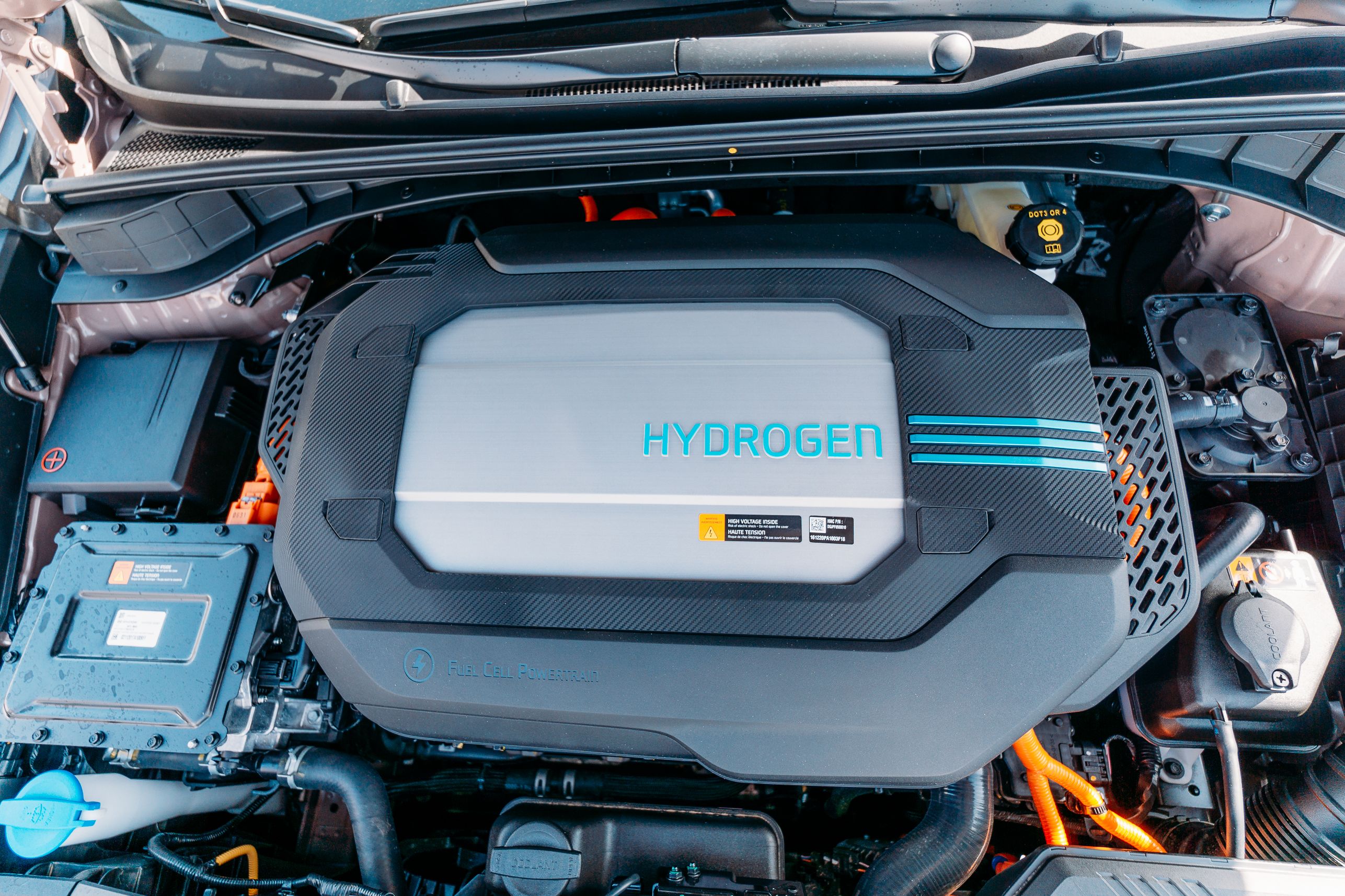
Hydrogen fuel cell of one of SEAFUELs cars
Hydrogen fuel cell of one of SEAFUELs cars
Improving European collaboration in hydrogen power
All the activities in SEAFUEL were also recognised by the funding authority, Interreg Atlantic Area, who have used the project as an example of sustainability within the EU Green Deal programme (E11). Combining the efforts of projects SEAFUEL, GenComm and HUGE (Dr Farràs was one of the work package leaders with Dr Roberto González), the Hydrogen Triple Alliance was created with the objective to strengthen the collaborations of EU-funded projects on hydrogen targeted to islands and remote communities (E12). In 2020, the Alliance was created and several events were organised under the umbrella of the three projects. One highlight was the organisation of the webinar H2 Trucks, led by the HUGE project, with experts from different truck manufacturers such as Hyundai, Volvo and Hyzon Motors. One of the objectives was to support the HUGE project case study in Iceland aiming at the development of a deployment plan for hydrogen trucks for logistics operations. The work, started in HUGE, has culminated in 2024 with the agreement of five Icelandic companies to purchase hydrogen trucks from commercial vehicle manufacturer MAN - the MAN hTGC (E13).
Overall, the impact of SEAFUEL and follow-on projects supports a multisectoral approach, with scientific advances on saline water electrolysis and its potential application in off-shore platforms; policy initiatives with input on regional sustainable and climate action plans and hydrogen strategies such as in Ireland (E14); economic benefits to companies directly involved in the project such as Logan Energy and HyEnergy Consultancy; and social benefits such as increased knowledge of hydrogen technologies in adults and children, as well as bringing communities closer to new innovations in renewable energy and hydrogen, as highlighted by Energy Cooperative Ireland:
"we also became a 'lighthouse' community, regionally and nationally, for Hydrogen technologies and sustainability innovations which continue to facilitate the achievement of our ambitions to achieve carbon neutrality (E8)."
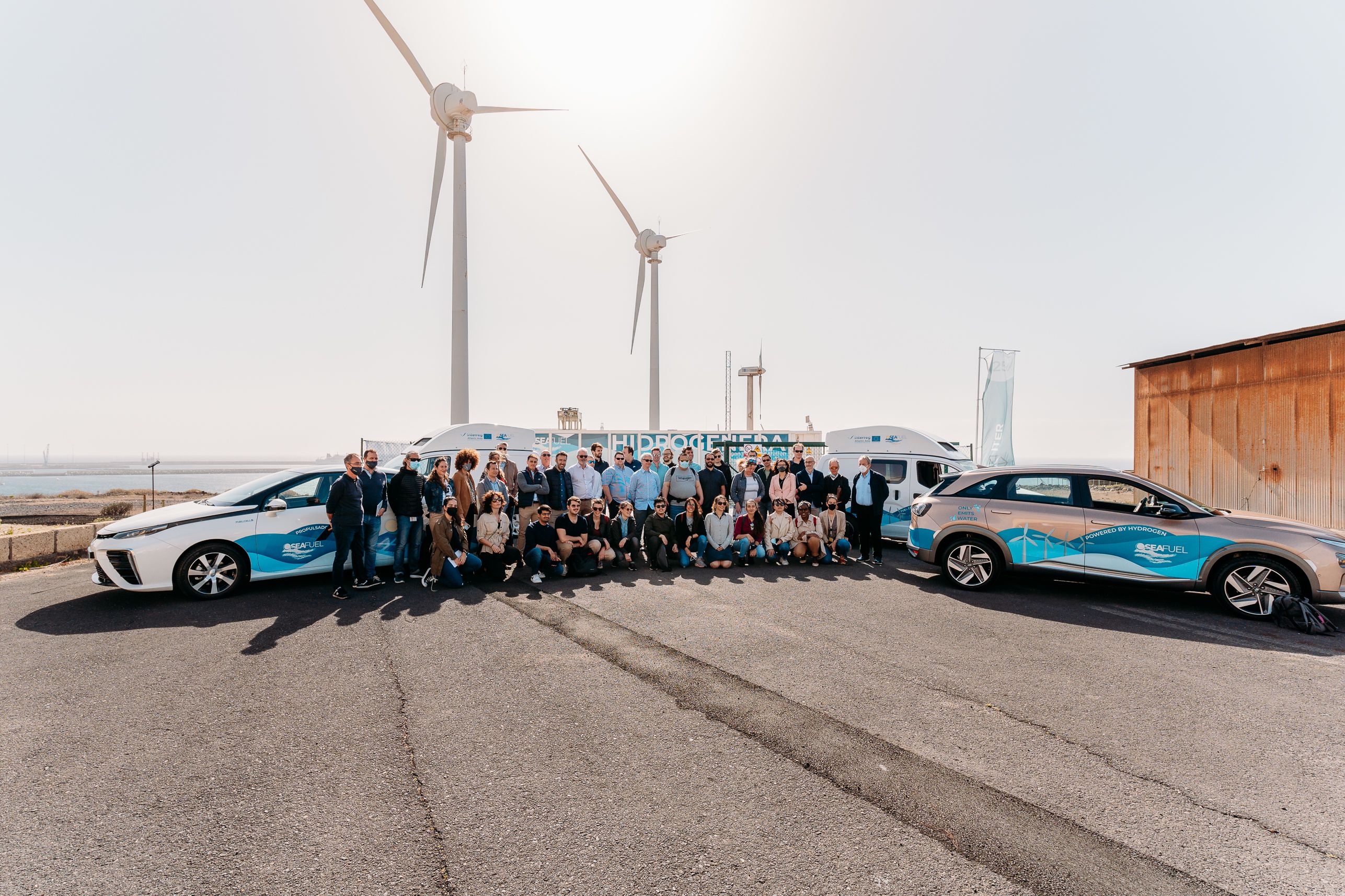
The SEAFUEL project celebrates the arrival of the first Hydrogen Refueling Station to Tenerife, the first one in the Canary Islands

Research Funding


This research was supported by co-funding from the Interreg Atlantic Area Programme through the European Regional Development Fund.

References to the Research:
- [R1] www.seafuel.eu; www.huge-project.eu
- [R2] Tong, W., Forster, M., Dionigi, F., Dresp, S., Sadeghi Erami, R., Strasser, P., Cowan, A.J. & Farràs, P. (2020). Electrolysis of low-grade and saline surface water. Nature Energy, 5(5), 367-377. http://doi.org/10.1038/s41560-020-0550-8
- [R3] Farràs, P., Strasser, P., & Cowan, A. J. Water electrolysis: direct from the sea or not to be? Joule 5 (2021) 1921–1923. http://doi.org/10.1016/j.joule.2021.07.01
- [R4] www.anemel.eu; www.greenhysland.eu; www.sh2amrock.eu
- [R5] Farràs, P., Machado, J. T., Flynn, B., & Williamson, J. (2023). Policy supports for the deployment of solar fuels: islands as test-beds for a rapid green transition. Progress in Energy, 5(2), 023001. http://doi.org/10.1088/2516-1083/accef8
- [R6] van Rensburg, T. M., Brennan, N., & Howard, A. (2023). Tourist preferences for fuel cell vehicle rental: going green with hydrogen on the island of Tenerife. International Journal of Hydrogen Energy, 48(75), 29350-29366. DOI://10.1016/j.ijhydene.2023.03.435 https://doi.org/10.1016/j.ijhydene.2023.03.435 As SEAFUEL coordinator, I led Dr van Rensburg to focus the study on the tourism preferences. This was his first hydrogen-related publication.
Evidence of Impact
- E1: Company registered by number 703842.
- E2: Testimonial Ian Williamson, CEO HyEnergy Consultancy.
- E3: Testimonial Bill Ireland, CEO Logan Energy.
- E4: https://www.enagas.es/en/press-room/news-room/press-releases/27_04_21_np_proyecto_disa_h2_verde_en_canarias/
- E5: SEAFUEL Final communication and dissemination report: https://www.seafuel.eu/downloads/#flipbook-df_4619/1/
- E6: EU President Ursula von der Leden endorses the Green Hysland approach: https://greenhysland.eu/commission-president-von-der-leyen-highlights-green-hysland-as-inspiring-example-to-clean-industry-and-reach-carbon-neutrality/
- E7: https://www.clean-hydrogen.europa.eu/projects-dashboard/projects-repository/sh2amrock_en
- E8: Testimonial Lúgh Ó Braonáin, Director of Energy Co-operatives Ireland.
- E9: https://www.canarygreen.org/seafuels-refuelling-station/
- E10: https://responsibletourismpartnership.org/rest-of-the-world/ and https://hub.wtm.com/atm-virtual/in-conversation-with-dr-pau-farras-coordinator-of-the-seafuel-based-at-nui-in-galway-ireland/
- E11: https://interreg.eu/interreghighlights/cooperation/pumping-up-a-greener-transport-in-europe-with-hydrogen/
- E12: https://www.siliconrepublic.com/machines/european-hydrogen-triple-alliance-renewable-tech-ireland
- E13: https://newenergy.is/en/2024/05/03/an-important-step-in-decarbonizing-hd-transport-in-iceland/
- E14: https://www.seafuel.eu/wp-content/uploads/2022/10/220121SEAFUEL-West-of-Ireland-SECAP.pdf